What is a white label payment gateway?
A white label payment gateway is a ready-made payment technology platform that you rebrand and offer as your own. It handles payment authorization, routing, encryption, fraud prevention, and settlement management — all under your company name and visual identity. Your customers interact with your brand while the underlying technology is powered by a proven infrastructure provider like Payneteasy.
How long does it take to launch a white label payment gateway?
With Payneteasy, a standard white label payment gateway launches in 2 to 4 weeks. This includes API integration, branding configuration, payment method activation, and compliance setup. Compare this to 12–18 months and $2–5 million typically required to build a payment gateway from scratch.
How much does a white label payment gateway cost compared to building one?
Building a payment gateway from scratch typically costs $2–5 million in development alone, plus $500K–1M annually for maintenance, compliance, and infrastructure. A white label solution from Payneteasy eliminates these upfront costs entirely. You pay a predictable monthly fee based on transaction volume, with no development team overhead, no PCI certification costs, and no infrastructure management expenses.
What payment methods does the white label gateway support?
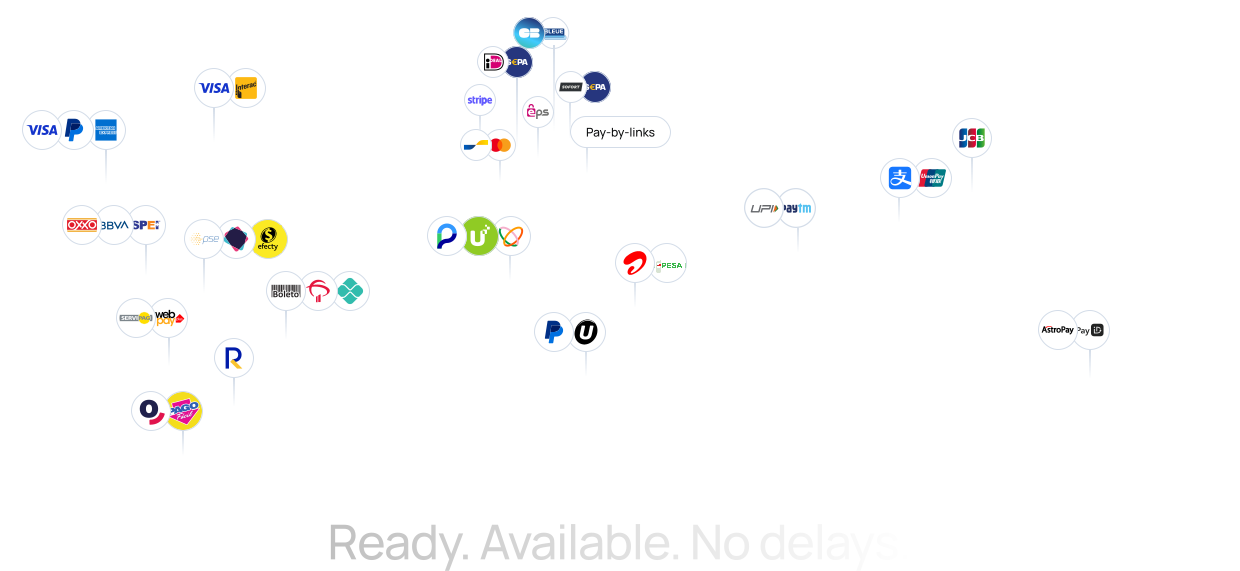
Payneteasy's white label gateway supports 1000+ payment methods across 200+ countries: Visa, Mastercard, AMEX, UnionPay, local card schemes, alternative payment methods (SEPA, iDEAL, PIX, UPI, M-Pesa, GCash), digital wallets (Apple Pay, Google Pay), cryptocurrency, and bank transfers. New methods are added through the orchestration layer without requiring code changes on your side.
Is the white label gateway PCI DSS compliant?
Yes. Payneteasy's white label payment gateway is PCI DSS Level 1 certified — the highest level of payment security compliance. This means you can offer payment processing services without managing your own PCI certification, which typically costs $50,000–200,000 annually and requires dedicated security infrastructure.
Can I connect multiple payment providers through the white label gateway?
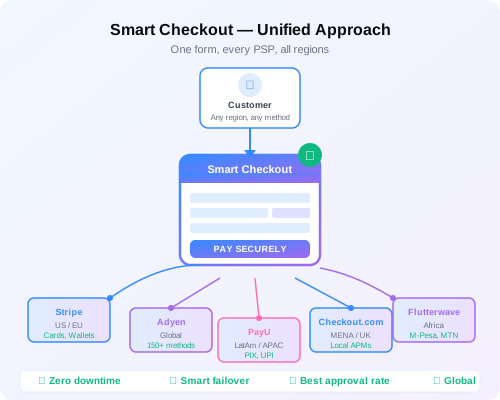
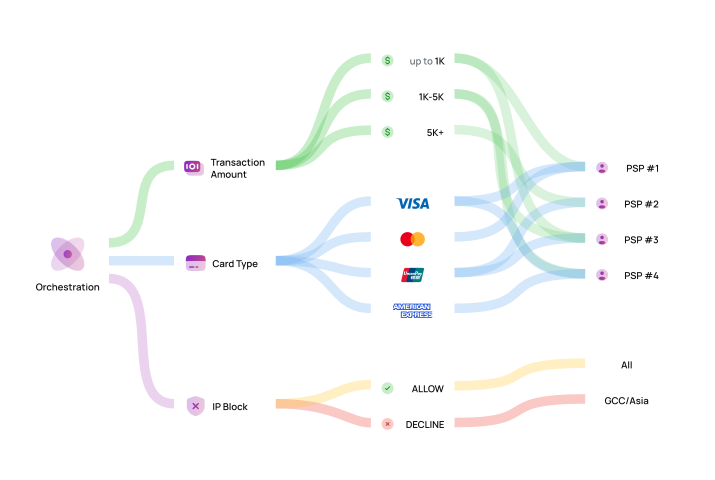
Yes. The gateway functions as a payment orchestration layer — you connect multiple acquirers, PSPs, and payment providers through a single API. Smart routing automatically directs each transaction to the optimal provider based on geography, card type, amount, success rates, and cost. This multi-provider approach increases acceptance rates by 8–15% compared to single-provider setups.
What is the difference between a white label payment gateway and a payment facilitator?
A white label payment gateway is a technology platform for routing and processing payments. A payment facilitator (PayFac) is a financial entity that manages merchant accounts under its own master merchant account. Payneteasy provides the technology layer — the gateway, routing engine, fraud tools, and checkout interface — not financial services. This means you retain full control over your banking relationships and commercial terms.
Who benefits most from a white label payment gateway?
White label payment gateways are ideal for PSPs looking to expand their payment capabilities, ISOs and agents wanting to offer branded payment services, SaaS platforms adding embedded payments, e-commerce platforms requiring multi-merchant payment processing, fintech companies entering the payments space, and banks or financial institutions modernizing their payment infrastructure.
What is the difference between a white label payment gateway and a payment processor?
A payment gateway is the technology layer that captures, encrypts, and routes payment data between customers and financial networks. A payment processor is the financial entity that actually moves funds between banks. Payneteasy provides the gateway technology — the routing, fraud prevention, checkout interface, and merchant tools. You maintain your own processor and acquirer relationships, giving you full control over your commercial terms and settlement arrangements.
Can I set my own pricing for my merchants?
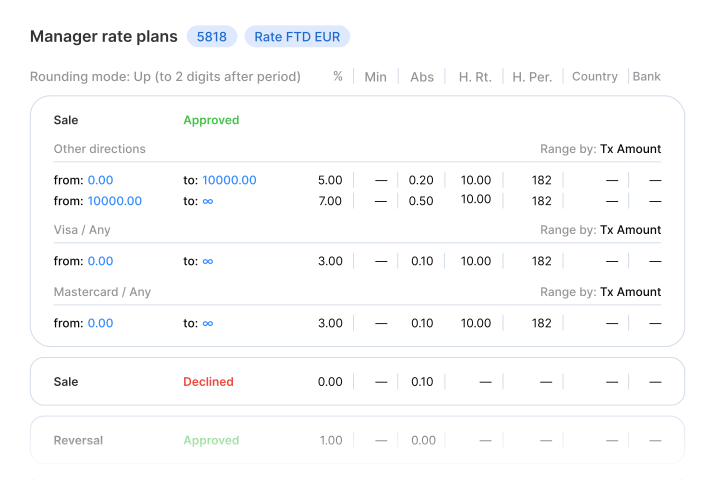
Yes. The white label model means you control your commercial relationships entirely. Set your own transaction fees, monthly charges, and pricing tiers for your merchants. Payneteasy charges you a technology fee based on your total transaction volume — the margin between your merchant pricing and your cost is your revenue.
How do I add new payment providers?
New PSPs and acquirers are added through the orchestration platform dashboard. Provide the provider's API credentials, configure routing rules, and the new integration is live — typically within hours. No code changes on your side are required, regardless of how many providers you connect.
Is the merchant dashboard fully white-labeled?
Completely. Your merchants log into a portal branded with your company name, logo, and color scheme. They see their transaction history, chargebacks, settlements, and analytics — all under your brand. You also get an admin dashboard with full visibility across all merchants, including aggregate analytics and performance monitoring.
What kind of support do I get during and after integration?
During integration, you get a dedicated technical account manager and direct access to the engineering team via Slack or your preferred communication channel. After launch, 24/7 support monitors your gateway, with escalation paths for critical issues. We also provide regular performance reviews and optimization recommendations based on your transaction data.
Can I migrate from my current payment gateway?
Yes. Payneteasy supports parallel running — process new transactions through the white label gateway while your existing gateway handles in-flight transactions and historical data. Token migration ensures recurring payment customers experience zero disruption. Most migrations complete within 4–6 weeks alongside the standard integration timeline.